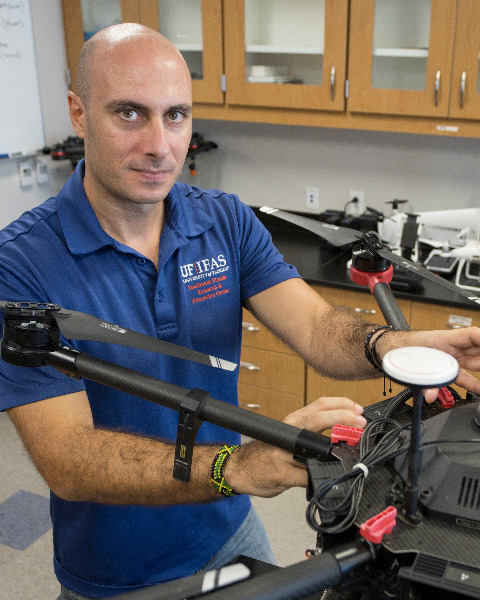
Associate Professor University of Florida Immokalee, Florida
Reducing the negative impacts of plant protection products (PPPs) is a major global societal challenge. There is an urgent need to reduce reliance on conventional PPPs, without affecting agricultural yield. Integrated pest management (IPM) could make a difference in this effort, as it emphasizes the growth of a healthy crop with the least possible disruption to agro-ecosystems, and encourages natural mechanisms for pest management. IPM is a systems approach that combines different crop protection practices to manage the development of populations of harmful organisms and keeps the use of plant protection products to levels that are economically and ecologically justified in order to reduce risks to human health and the environment. The aim is not to eradicate pest populations but rather to manage them below levels that cause economic damage. The first step of an IPM is to monitor insect populations in order to determine the need to spray. Since labor shortage is a major issue in U.S., artificial intelligence (AI), internet of things (IoT), and cloud-based technologies can simplify pest scouting procedures and improve precision spraying applications, reduce labor cost, decrease data collection time, and produce critical and practical information. Rapid methods for early detection of pests and diseases would assist growers in making timely management decisions and to limit spread. This talk presents novel AI applications for precision pest and disease detection and management, including an automated insect monitoring system, disease detection utilizing unmanned aerial vehicles (UAVs), and smart spraying technologies.